
Buying Brass Lights for international projects involves more than choosing an attractive finish. A polished surface may look perfect under showroom lighting, yet show fingerprints, uneven plating, or color shifts after shipping. Global buyers must examine material composition, construction quality, socket standards, wiring, dimensions, and installation requirements before approving an order. Small details matter. A 3-millimeter misalignment can delay a hotel installation when hundreds of fixtures are involved.
This guide shares ten practical buying tips based on common sourcing concerns and professional lighting evaluation. It explains how to assess brass grades, request reliable samples, verify supplier capabilities, and compare the full landed cost. Product testing, packaging strength, certifications, and destination-country requirements also deserve careful attention. Requirements vary by market, so buyers should confirm them with qualified local professionals. Never rely on a supplier’s catalog alone. Ask for test reports, technical drawings, finish samples, and clear warranty terms. Experience helps, but assumptions still create problems.
Look beyond the purchase price.
A low quotation may exclude inspection, replacement parts, duties, or specialized installation. Delivery schedules can change because of raw material shortages or customized finishes. Even a trusted supplier may need closer communication when specifications are unclear. Buyers should record every approved detail, including color reference, cable length, mounting method, and carton markings. These steps support more consistent purchasing decisions and reduce avoidable disputes. The process is not flawless. However, careful questions, documented checks, and realistic expectations can make Brass Lights a dependable choice for residential, hospitality, and commercial projects worldwide.
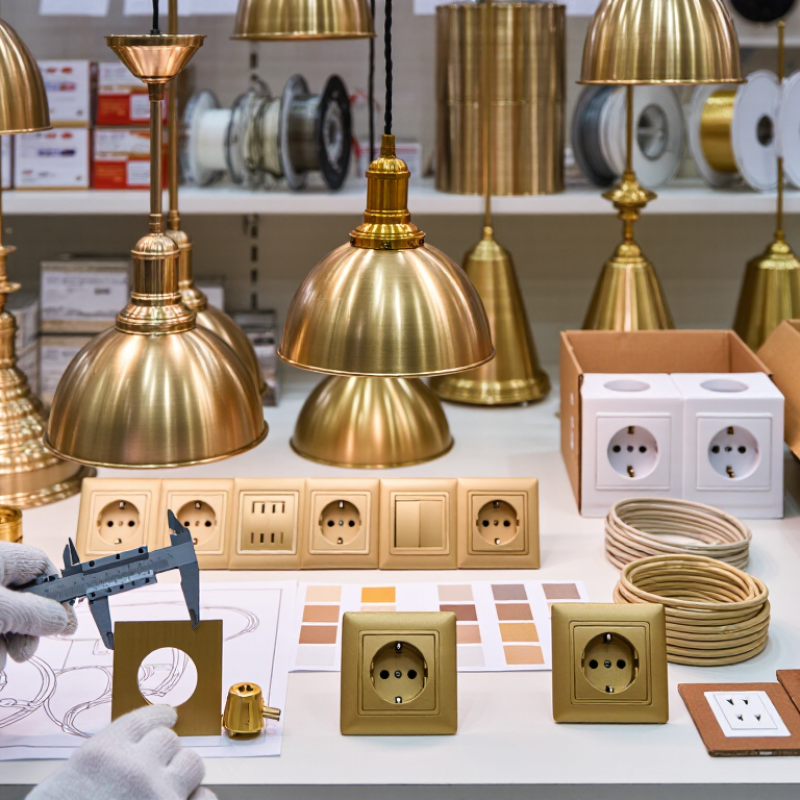
Understanding brass light types prevents costly mismatches between design, room function, and installation conditions. In my sourcing work, I inspect the fixture’s weight, socket quality, wiring access, and surface finish. A pendant light suits dining tables, kitchen islands, and reception counters. Its drop length must leave comfortable head clearance. Small pendants can look lost above large tables.
Wall sconces work well in corridors, bedrooms, and bathrooms. Choose shielded designs for softer lighting near mirrors. Chandeliers create a strong focal point in dining rooms or hotel entrances. However, oversized brass frames can overwhelm low ceilings. Table lamps provide flexible task or ambient lighting. They need stable bases, accessible switches, and shade proportions that prevent glare.
Outdoor brass lights require closer review. Confirm their moisture rating, sealing method, and resistance to coastal air. Brass may develop uneven patina, especially near saltwater. That is attractive to some buyers, but not everyone expects it. Ask for finish samples under natural light. Color can differ between batches. This happens.
Before ordering, compare bulb compatibility, voltage requirements, mounting hardware, and local electrical standards. A beautiful fixture becomes a problem when installers cannot access its terminals. I also request drawings with exact dimensions and cable lengths. Product photographs rarely show these details clearly. Buyers should leave room for human error, especially when translating measurements across markets. A small tolerance can change the installation result.
When buying brass lights globally, inspect the metal before admiring the shape. Brass should have a declared alloy grade, not simply “solid brass” on a quotation. The U.S. Geological Survey’s Mineral Commodity Summaries 2024 estimated global mined copper production at about 22 million metric tons in 2023. That scale does not guarantee consistent alloy quality. Ask for composition reports, casting records, and independent testing. A magnet test is useful, but limited. It cannot prove brass purity.
Finish quality needs measurable evidence. Check hidden edges, threaded parts, and canopy interiors for pinholes, uneven color, or exposed base metal. Request coating thickness readings and adhesion results. ISO 9227 salt-spray testing and ASTM B117 are useful references, although test duration must match the installation environment. A bright sample can mislead. I still find small scratches after delivery. That is why pre-shipment inspection matters. Photograph each carton and fixture.
Manufacturing control should include ISO 9001-based procedures and documented checks under IEC 60598-1 for luminaire safety. Ask whether tests cover wiring, grounding, heat resistance, and mechanical strength. Require batch traceability from alloy purchase to final assembly. The International Organization for Standardization reported more than one million ISO 9001 certificates worldwide in its 2022 survey, but certification alone is not proof of every product’s quality. Review the actual certificate scope. Verify laboratory accreditation, test dates, and sample identification before accepting the order.
| No. | Buying Dimension | What to Check | Practical Benchmark or Reference | Recommended Buyer Evidence | Common Risk |
|---|---|---|---|---|---|
| 1 | Brass alloy composition | Confirm whether the visible body, arms, sockets, and decorative parts are made from solid brass, brass sheet, brass tube, or brass-plated base metal. | Common wrought brasses include C26000, C26800, and C36000. The exact alloy should match the approved technical drawing and application. | Request a material declaration, mill certificate, or independent X-ray fluorescence (XRF) test report for production samples. | Brass-plated steel or zinc alloy may be supplied as solid brass without clear disclosure. |
| 2 | Lead and restricted substances | Check lead content in brass components, solder, coatings, and electrical parts, especially for products intended for regulated markets. | Ask for compliance with applicable limits under RoHS Directive 2011/65/EU and its amendments. Market-specific requirements may also apply. | Obtain a current third-party RoHS test report covering homogeneous materials, not only a general supplier statement. | Decorative brass can contain restricted substances if recycled or low-cost alloys are used without controlled sourcing. |
| 3 | Material thickness and structural strength | Measure the thickness of shades, backplates, canopies, tubes, and mounting brackets. Inspect welds, threads, joints, and load-bearing connections. | Use the approved drawing tolerance and conduct a sample measurement at several points. Thin or uneven sections should not be accepted solely on appearance. | Require a dimensional inspection report, calibrated measuring records, and photographs of concealed joints before shipment. | Excessively thin brass may deform, vibrate, strip threads, or fail during installation. |
| 4 | Surface preparation before finishing | Inspect polishing, brushing, deburring, weld blending, and cleaning before lacquer, plating, or other finishing processes. | The surface should be free from sharp edges, deep scratches, oil residue, visible pits, and inconsistent grain direction. | Define an approved golden sample and specify inspection under consistent lighting and viewing distance. | Finishing may hide machining marks temporarily, while defects can reappear after cleaning or handling. |
| 5 | Finish type and color consistency | Identify the finish precisely: polished brass, satin brass, antique brass, brushed brass, lacquered brass, electroplated brass, or PVD-coated finish. | Use a physical color standard and define acceptable variation for each production batch. Digital images should not be the only color reference. | Approve a signed finish sample and request batch-to-batch color records, surface photographs, and coating specifications. | “Gold” or “brass” may describe very different colors, gloss levels, and coating processes. |
| 6 | Coating adhesion and durability | Check whether the finish resists peeling, flaking, blistering, corrosion, fingerprints, and routine handling. | For coated surfaces, agree on a cross-cut adhesion test method such as ISO 2409 or ASTM D3359, where applicable. Acceptance levels should be stated in the purchase specification. | Request coating process details, adhesion test records, and salt-spray or humidity-test results when required by the project. | A visually attractive finish may fail quickly if pretreatment, cleaning, or curing is poorly controlled. |
| 7 | Electrical and lighting safety | Verify lamp-holder rating, wiring insulation, earthing, strain relief, terminal security, thermal protection, and compatibility with the intended voltage and frequency. | IEC 60598-1 is a widely used general safety reference for luminaires; local certification requirements still depend on the destination market. | Request electrical test reports, wiring diagrams, component ratings, installation instructions, and samples from the actual production configuration. | A decorative brass body does not prove that the complete luminaire is electrically safe or market-compliant. |
| 8 | Manufacturing quality system | Assess control of incoming materials, first-article approval, in-process inspection, final inspection, nonconforming products, and traceability. | ISO 9001 certification can indicate a documented quality management system, but it does not replace product-specific inspection. | Review the quality manual summary, inspection plan, calibration records, corrective-action process, and production traceability system. | A certificate alone cannot confirm that every batch meets the agreed design and finish requirements. |
| 9 | Packaging and international transport | Check protection for polished surfaces, glass, protruding arms, threaded parts, and electrical components during container or courier transport. | Use individual wrapping, separated internal components, corner protection, and a tested export carton suitable for the shipping method. | Request packaging drawings, drop-test or transport-test records where appropriate, carton dimensions, gross weight, and loading photographs. | Scratches, bent arms, broken glass, and missing small hardware can create high replacement costs after arrival. |
| 10 | Pre-shipment inspection and documentation | Inspect quantity, dimensions, finish, electrical function, accessories, labels, manuals, and carton markings before goods leave the production site. | Use an agreed sampling plan, such as a documented AQL inspection, with critical, major, and minor defect limits. | Keep the approved drawing, finish sample, inspection checklist, test reports, packing list, invoice data, and product photographs in one shipment file. | Unclear acceptance criteria can make quality disputes difficult to resolve after delivery. |
Brass lights should be judged by measured performance, not polished appearance. The International Energy Agency reports that lighting uses about 15% of global electricity. Ask for lumen output, beam angle, color rendering, and color temperature. A warm 2700K finish may suit hospitality spaces, while 4000K can improve task visibility. Check glare carefully. Bright is not always comfortable. In my experience, decorative brass shades often hide heat problems, so request test data at operating temperature.
Tip: Compare LM-79 photometric reports, not only catalog claims. Check lumen maintenance data under LM-80 and TM-21 methods. These documents reveal whether performance may decline after installation. The evidence can still feel incomplete, especially for new designs. That uncertainty deserves a written warranty.
Safety requires equal attention. Confirm the fixture’s applicable IEC 60598-1 compliance documents, insulation class, grounding method, and maximum operating temperature. Outdoor buyers should verify the correct IP rating for rain and dust exposure. Inspect cable entries, screw terminals, and sharp brass edges during sampling. A beautiful sample can fail basic installation checks. Request material declarations for restricted substances and clear instructions for local electricians.
Tip: Compare energy use at the same light level. The U.S. Department of Energy states that LED lighting can use at least 75% less energy and last up to 25 times longer than incandescent lighting. Choose replaceable drivers when practical. Integrated products may look cleaner, but replacement can become difficult. Also check standby power, dimming compatibility, flicker results, and emergency-lighting behavior before approving a global order.
Comparing brass light suppliers requires more than a polished catalog. Ask for factory photos, material specifications, wiring test records, and recent export experience. A reliable supplier should explain brass composition, surface treatment, and socket standards clearly. Request a sample before placing a large order. Hold it under warm light. Check its weight, thread accuracy, weld marks, and finish consistency. Small defects often become expensive at scale. Do not rely on one email promise.
Pricing should separate the lamp body, electrical parts, packaging, tooling, inspection, and freight. A low unit price may hide weak cartons or high replacement rates. Compare quotations with identical specifications, including dimensions, bulb base, cord length, color, and packing method. Ask whether prices change at 50, 200, or 1,000 units. Minimum orders vary by finish and production setup. A supplier may accept 30 standard pieces but require 100 pieces for custom coating. Get this detail in writing. Currency shifts and freight surprises can damage a careful budget.
Customization needs a practical brief, not only a sketch. Send drawings with tolerances, reference photos, finish samples, and target performance. Confirm prototype fees, revision limits, mold ownership, and approval stages. I have seen buyers approve a digital rendering, then find the brass looked too orange in daylight. Test both conditions. Ask for a pre-production sample and signed specification sheet. Some teams rush this step. That is usually a mistake. Allow time for corrections, because attractive lighting can still fail during installation when mounting plates or cable lengths are wrong.
Buying brass lights across borders requires more than comparing prices and finishes. I check the brass grade, wiring, socket type, and surface coating before approving samples. A small finish difference can become obvious across a large installation. Ask for clear product photos, packing dimensions, net weight, and carton test records. These details help forwarders quote accurately and reduce surprise charges.
Shipping terms must be written in plain language. Confirm the Incoterm, insurance responsibility, delivery port, and customs paperwork. Request the correct HS code, commercial invoice, packing list, and certificate documents where required. Electrical compliance varies by destination, so verify voltage, frequency, plug design, labeling, and applicable safety tests with a qualified local professional. Never rely on a familiar certificate alone. Regulations change, and I have seen old documents delay otherwise complete shipments.
Protect the fixtures with molded inserts, moisture barriers, and corner reinforcement. Brass can arrive scratched even when the outer carton looks untouched. Record carton photos before loading. Keep spare sockets, screws, and finish samples available for service requests. Set a written warranty process with response times, replacement rules, and evidence requirements. Be realistic about lead times. Ocean delays happen. A practical after-sales plan may include video troubleshooting, local repair guidance, and reserved replacement parts. I would also review the process after every shipment, because one successful delivery does not prove the system is reliable.
Managing International Shipping, Compliance, and After-Sales Support
The chart groups the ten buying tips into four practical risk areas. Product specifications and import compliance receive the highest focus because they directly affect safety, market access, and installation outcomes. Shipping preparation and after-sales support help reduce delivery damage, claims, and long-term service issues.
476 Main Street - Route 28
Dennisport, MA 02639
Share On: