
China Top Door and Window Contractors for Global Buyers
Choosing reliable door and window contractors in China requires more than comparing prices online. Global buyers need partners who understand design, manufacturing, testing, packaging, and installation requirements. A capable contractor should explain thermal-break aluminum systems, laminated glass options, drainage details, and hardware performance clearly. They should also provide drawings before production begins.
Experience matters on real projects. Strong contractors can discuss uneven openings, coastal corrosion, high wind exposure, and large glass panels. They usually support site measurements, sample approvals, factory inspections, and container loading. Clear production schedules are essential. So are detailed quotations.
Documentation builds confidence.
Buyers should request business credentials, project references, product test reports, and evidence of quality control. Relevant certifications may include those required by the destination market. However, certificates alone cannot prove reliable performance. A factory audit, video inspection, or independent quality check can reveal practical details. Look closely at corner joints, gasket placement, protective film, and crate strength.
No contractor is perfect. Communication delays can still happen. Some attractive quotations hide installation exclusions or changing material specifications. This guide examines China’s leading door and window contractors from a global buyer’s perspective. It considers technical capability, export experience, customization, after-sales support, and delivery reliability. The selection is not a final verdict. Project conditions vary, and buyers should verify every important claim before signing. Careful comparison often prevents expensive mistakes later.
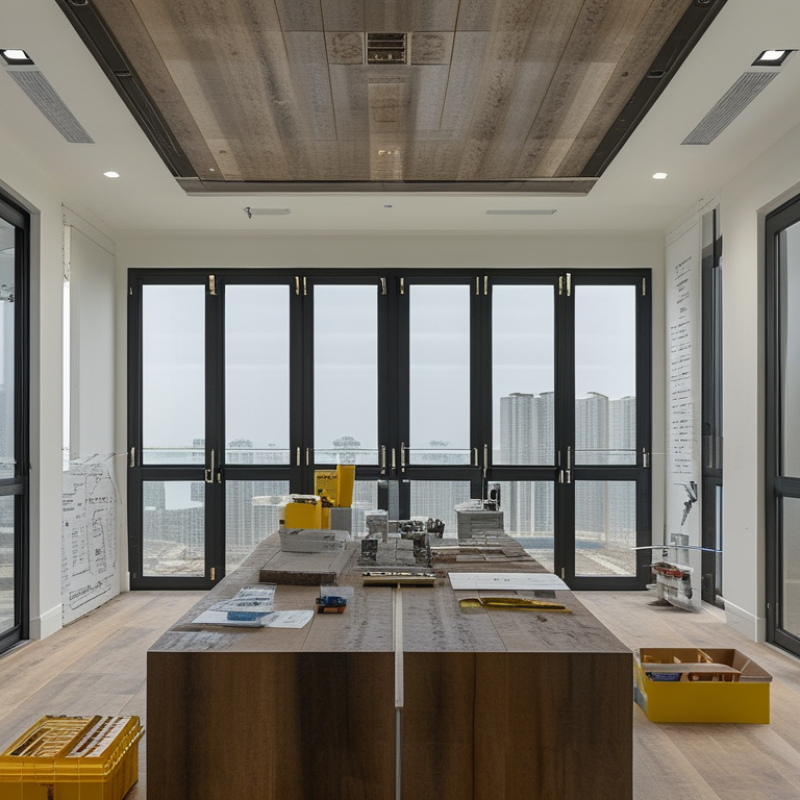
China’s Door and Window Contracting Industry: Scope and Market Role
China’s door and window contracting industry covers design support, material sourcing, fabrication, delivery, installation, testing, and maintenance. Contractors serve residential towers, commercial buildings, industrial facilities, and renovation projects. Their role extends beyond supplying frames and glass. They coordinate structural openings, thermal performance, acoustic targets, water drainage, hardware, and site safety. Experienced teams often review drawings before production. They also identify installation risks that may not appear on paper.
For global buyers, contractors connect international specifications with China’s manufacturing supply chain. They may arrange prototype units, factory inspections, production schedules, packing plans, and installation supervision. Practical checks matter. A coastal project may require stronger corrosion protection. A cold-climate building may need insulated frames and carefully sealed joints. Small errors in measurements can create visible gaps, delayed installation, or expensive rework. Details decide outcomes.
Reliable cooperation still requires buyer involvement. Some contractors have strong factories but limited overseas project experience. Others communicate well but lack complex installation capacity. This is often overlooked. Buyers should examine project references, technical drawings, sample quality, inspection records, and after-sales procedures. A low quotation can hide missing hardware, weak packaging, or unclear responsibility for site adjustments. Clear tolerances and approval stages reduce disputes, although they cannot remove every risk. Good contractors remain responsive when conditions change, especially after the first installation unit exposes an unexpected problem.
| Industry Dimension | Typical Scope and Data | Common Project Application | Importance for Global Buyers | Procurement Checkpoint |
|---|---|---|---|---|
| Contracting Model | Design, fabrication, delivery, installation, testing, and after-sales coordination can be managed under one contract or divided among specialist contractors. | Residential developments, commercial buildings, hotels, schools, hospitals, and public infrastructure. | Integrated contracting can reduce interface problems between architects, suppliers, installers, and general contractors. | Confirm responsibility for design approval, site measurement, structural interfaces, installation, defects, and handover. |
| Product Portfolio | Aluminium windows, uPVC windows, curtain walls, storefronts, doors, sliding systems, folding systems, skylights, louvers, balustrades, and insect screens. | New construction, renovation, façade replacement, energy-efficiency upgrades, and mixed-use developments. | A broad product range allows buyers to coordinate multiple façade and fenestration packages through fewer supply channels. | Request a product schedule showing system type, opening configuration, dimensions, hardware, glazing, and finish. |
| Material Systems | Common materials include thermally broken aluminium, standard aluminium, uPVC, stainless steel, laminated timber, and composite assemblies. | Material selection depends on climate, building height, architectural design, maintenance requirements, and budget. | Material and coating choices affect structural performance, corrosion resistance, thermal efficiency, appearance, and service life. | Review alloy or profile specifications, surface-treatment method, colour reference, coating documentation, and maintenance requirements. |
| Glass Configuration | Single, double, and triple glazing may be supplied with low-emissivity coatings, laminated layers, toughened panels, acoustic interlayers, or solar-control features. | Residential windows, high-rise façades, schools, hotels, offices, and buildings in severe weather or high-noise areas. | Glass configuration directly influences thermal transmittance, solar heat gain, acoustic performance, safety, and overall façade weight. | Specify glass composition, thickness, safety classification, spacer type, gas fill where applicable, and performance targets. |
| Performance Engineering | Key performance areas include air permeability, watertightness, wind-load resistance, thermal transmittance, acoustic insulation, impact safety, and operational durability. | Façades and windows exposed to strong wind, driving rain, temperature variation, traffic noise, or frequent operation. | Performance must be matched to local building codes, climate zones, façade height, exposure category, and occupancy requirements. | Ask for tested or calculated values and ensure the test specimen matches the proposed profile, glass, hardware, joints, and dimensions. |
| Design and Engineering | Typical services include shop drawings, section details, connection design, anchor layouts, drainage design, thermal reviews, and quantity schedules. | Custom façades, irregular openings, high-rise buildings, renovation projects, and projects requiring coordination with structural systems. | Early engineering support helps prevent dimensional conflicts, water-management failures, installation delays, and costly site modifications. | Define drawing formats, revision procedures, approval milestones, design responsibility, and requirements for local professional sign-off. |
| Quality Control | Production control generally covers incoming material inspection, profile and glass checks, dimensional verification, assembly inspection, sealing, hardware operation, and final packing. | Repeated-window orders, unitized façades, large commercial packages, and projects with strict inspection procedures. | Documented quality control improves consistency across batches and provides traceability when products are delivered in multiple shipments. | Request inspection plans, sample approval records, batch identification, nonconformity procedures, and pre-shipment inspection rights. |
| Relevant Standards | Projects may require compliance with applicable Chinese GB standards, European EN standards, ASTM methods, Australian standards, or local building regulations. | International projects where products must be accepted by authorities, consultants, insurers, or general contractors. | Standards define testing methods and acceptance criteria, but the applicable code depends on the destination market and project specification. | Identify the governing code before quotation and verify that certificates cover the exact product configuration being purchased. |
| Surface Finishing | Common finishes include anodizing, powder coating, liquid coating, wood-effect finishes, and protective treatments selected for exposure conditions. | Coastal zones, high-UV regions, industrial areas, humid climates, and projects with strict colour consistency. | Finish quality affects colour stability, corrosion resistance, visual uniformity, and long-term maintenance cost. | Approve physical samples and specify finish class, colour tolerance, gloss level, pretreatment, warranty conditions, and repair procedures. |
| Installation Capability | Installation scope may include site survey, unloading, protection, frame fixing, glazing, sealing, adjustment, water testing, cleaning, and handover documentation. | Projects where local labour capability, façade access, safety management, or coordination with other trades is limited. | Professional installation is essential because field workmanship can materially affect air, water, thermal, acoustic, and operational performance. | Check installer qualifications, method statements, safety plans, equipment requirements, supervision arrangements, and site acceptance criteria. |
| Typical Production Timing | Approximately 4–8 weeks | Standard or moderately customized orders after approved drawings, colour, glass, and hardware are confirmed. | Production timing helps buyers align procurement with structural completion, façade access, shipping, and installation windows. | Obtain a project-specific schedule; complex façades, special glass, unusual finishes, and approval changes may extend the period to approximately 8–16 weeks. |
| Packaging and Logistics | Export shipments commonly use reinforced crates, corner protection, separators, moisture protection, labels, and container loading plans. | Long-distance sea freight, multimodal transport, congested project sites, and phased deliveries. | Appropriate packing reduces glass breakage, frame deformation, surface damage, moisture exposure, and unloading risk. | Agree packing standards, container utilization, loading sequence, package weights, lifting points, shipping marks, and inspection photographs. |
| Delivery Terms | International contracts may use EXW, FOB, CFR, CIF, DAP, or other agreed Incoterms, with responsibilities allocated for freight, insurance, customs, and delivery. | Direct export, project cargo, distributor supply, and contractor-managed international procurement. | Clear allocation of transport and customs responsibilities helps prevent unexpected costs and delivery disputes. | State the applicable Incoterms edition, named place, insurance responsibility, import documentation, and customs classification. |
| Buyer Segments | Typical buyers include developers, general contractors, façade contractors, architects, distributors, importers, and public-sector procurement teams. | Private developments, infrastructure projects, renovation programmes, and regional distribution. | Different buyer types require different levels of design support, documentation, credit terms, packaging, and installation assistance. | Match the contracting approach to the buyer’s technical resources, purchasing authority, site control, and local compliance obligations. |
| Export Market Coverage | Chinese door and window contractors commonly serve projects across Asia, the Middle East, Africa, Europe, Oceania, and the Americas. | Climate-diverse markets ranging from tropical and coastal locations to cold, dry, high-wind, and high-solar-exposure regions. | International experience can support adaptation to different codes, climate conditions, shipping routes, and construction practices. | Request references by destination region and confirm experience with the specific local code, climate, installation method, and approval process. |
| Sustainability Role | Energy-efficient glazing, thermal breaks, daylight optimization, durable finishes, recyclable aluminium, and controlled material use are common sustainability measures. | Green buildings, energy retrofits, low-energy housing, commercial developments, and projects with environmental targets. | Fenestration affects heating and cooling loads, indoor comfort, daylight, embodied carbon, and long-term replacement frequency. | Request thermal calculations, material declarations where required, recycled-content information, maintenance plans, and project-specific environmental documentation. |
| Commercial Terms | Important terms include approved samples, payment milestones, retention, performance security, liquidated damages, warranty period, spare parts, and variation procedures. | Large construction contracts, phased developments, public projects, and projects involving multiple stakeholders. | Well-defined commercial terms clarify cash flow, delivery obligations, defect correction, and responsibility for design or site changes. | Ensure the contract covers measurable acceptance criteria, warranty exclusions, response times, replacement procedures, and dispute resolution. |
| Warranty and After-Sales | Often contract-dependent, with separate coverage for frames, finishes, glass, hardware, sealants, and installation workmanship. | Commercial buildings, residential developments, hotels, hospitals, and projects requiring long-term facilities management. | After-sales support is especially important when replacement parts, technical advice, or site visits must be coordinated across borders. | Define warranty duration, exclusions, spare-parts availability, claim evidence, service response time, and responsibility for labour and freight. |
| Market Role | China’s contracting industry combines manufacturing capacity, engineering services, customized fabrication, export logistics, and installation coordination. | Complete fenestration packages, façade subcontracting, private-label supply without displaying manufacturer data, and project-based export. | The industry can provide scalable production and integrated project support while allowing buyers to specify local performance and design requirements. | Evaluate the contractor on verified technical capability, documentation quality, project controls, compliance, communication, and total delivered cost. |
| Buyer note: Lead times, performance values, warranty periods, costs, and compliance requirements vary by project design, destination regulations, material selection, order volume, and installation conditions. All figures shown above are typical planning references rather than universal contract guarantees. | ||||
Related Posts
-
Why Choosing Aluminum Screen Doors Can Enhance Your Home's Comfort and Style
-

What is the Importance of Windows Doors in Home Design?
-
Top 10 Window Places to Buy the Best Windows Worldwide?
-
Top Rated Long Windows and Doors for Global Buyers?
-
What is a Window and Door Store and How to Choose One?
-
2026 Top Trends in Window and Door Installation for Modern Homes?
Share On: