| 1 | Dry-Deck Interactive Fountain | Flush nozzles produce vertical jets from a paved surface; water drains through concealed grilles and is recirculated. | 0.3–3.0 m for most public-play layouts | Usually a concealed underground tank; commonly about 0.6–1.5 m equipment-tank depth, subject to hydraulic design. | High
Water, pressure, or motion sensors can trigger individual zones. | Excellent; LED fixtures and digitally timed music sequences are commonly integrated. | Public plazas, civic squares, retail promenades, family destinations, and pedestrian areas. | Requires slip-resistant paving, effective drainage, filtration, and winterization where freezing occurs. | Medium–High |
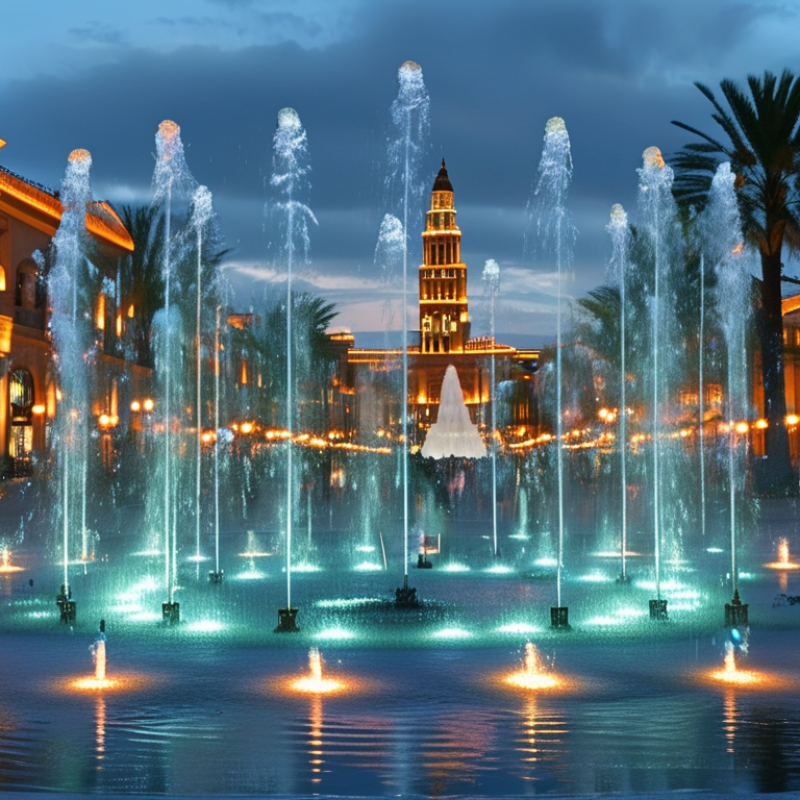
| 2 | Programmable Musical Fountain | Computer-controlled jets, valves, pumps, lighting, and audio create synchronized choreographies. | 1–20 m, depending on nozzle type and visual scale | Can use a shallow visible basin or a concealed recirculation tank; depth is determined by pump and nozzle design. | Medium
Usually programmed shows rather than direct visitor interaction. | Excellent; supports timed playlists, DMX or comparable lighting control, and show automation. | Tourist landmarks, cultural venues, shopping districts, hotels, and large civic developments. | Needs robust electrical protection, acoustic planning, water treatment, and scheduled technical servicing. | High |
| 3 | Floating Musical Fountain | Floating platforms carry pumps, nozzles, lights, and control equipment on a lake, reservoir, or large basin. | 2–30 m, depending on platform size, wind, and nozzle selection | Requires sufficient open water for buoyancy, anchoring, access, and safe operating clearance. | Low–Medium
Usually show-controlled; visitor interaction is generally remote. | Very good; wireless or cabled control can coordinate jets, lights, and music. | Urban lakes, resorts, waterfront parks, exhibition sites, and large landscape projects. | Wind, waves, water level changes, algae, corrosion, boat traffic, and anchoring must be assessed. | High |
| 4 | Dancing Jet Fountain | Multiple directional nozzles create moving, sweeping, crossing, or pulsing water patterns. | 1–8 m for typical plaza installations | Usually requires a basin or concealed tank sized for changing flow rates and surge volume. | Medium
Can be combined with sensors, but most movement is pre-programmed. | Excellent; fast valve response supports rhythm-based choreography and color changes. | Event plazas, shopping centers, entertainment districts, and landmark public spaces. | Directional nozzles need accurate alignment; wind can affect pattern stability and overspray. | Medium–High |
| 5 | Laminar Arch Fountain | Clear, glass-like water streams form arches between outlets while retaining a smooth, coherent shape. | 0.8–4 m | Often installed in a shallow basin or dry-deck system with concealed drainage. | Medium
Can be arranged as touch-activated or sensor-controlled arches. | Very good; individual streams can be sequenced with LED illumination and music. | Architectural plazas, entrances, hospitality developments, and interactive walkways. | Needs clean, well-filtered water and stable hydraulic pressure; wind can break the stream shape. | Medium |
| 6 | Linear Trench or Slot-Jet Fountain | Continuous lines or repeated jets are integrated into paving, seating edges, or landscape bands. | 0.2–2.5 m | Typically uses narrow channels with concealed collection drains and a remote equipment tank. | Medium–High
Suitable for proximity sensors and individually controlled zones. | Good; zones can be sequenced with music and architectural lighting. | Long plazas, pedestrian streets, transit forecourts, commercial frontages, and narrow sites. | Requires precise paving coordination, accessible maintenance covers, and reliable drainage performance. | Medium |
| 7 | Mist and Fog Fountain | Very fine water droplets create a cooling cloud, atmospheric effect, or illuminated haze rather than tall jets. | 0.5–3 m mist plume height | Usually uses a concealed reservoir and high-pressure pump system; no deep public basin is required. | High
Motion, temperature, humidity, or occupancy sensors can control operation. | Good; lighting is especially effective at night, while music is usually an optional layer. | Hot-climate plazas, gardens, event spaces, museums, resorts, and shaded pedestrian areas. | Wind disperses mist; nozzles require careful filtration and cleaning, and local water-quality rules may apply. | Medium |
| 8 | Cascade and Sheet-Water Fountain | Water flows over stepped surfaces, weirs, walls, or precision edges to create continuous curtains or cascades. | 0.3–6 m fall height | Requires collection basins, weirs, waterproofed structures, and recirculation tanks; public access depth is normally shallow. | Low–Medium
Flow rates and zones may be remotely adjusted but are less commonly touch-activated. | Good; lighting and music can emphasize flow changes and programmed transitions. | Terraced plazas, memorials, hotel forecourts, landscape walls, and architectural entrances. | Waterproofing, splash control, mineral deposits, and safe edge detailing are key design concerns. | Medium–High |
| 9 | Aerated Geyser and Bubbling Jet Fountain | Large, foamy, oxygenated columns or bubbling jets create a strong visual effect with relatively simple nozzle geometry. | 0.5–10 m | Generally needs a basin or concealed tank with enough volume to manage turbulence and return flow. | Low–Medium
Can be zoned and timed, but direct interaction is not usually the primary feature. | Good; works well with color-changing lights and slower musical compositions. | Large civic basins, parks, resorts, roundabouts, and landscape focal points. | Often more tolerant of minor water-quality variation than fine laminar systems, but still needs filtration and cleaning. | Low–Medium |
| 10 | Water Wall and Curtain Fountain | A vertical wall, transparent sheet, or narrow curtain of water forms an architectural backdrop or visual screen. | 1–8 m wall or curtain height | Requires a concealed trough, collection basin, waterproofed wall structure, and recirculation equipment. | Low
Usually visual and programmable rather than intended for physical visitor interaction. | Very good; linear lighting and gradual audio programming suit architectural presentations. | Building entrances, hospitality areas, cultural venues, interior courtyards, and boundary features. | Indoor installations need humidity control; outdoor versions require wind, splash, scale, and mineral-deposit management. | Medium–High |

Share On: