
Blog

Top SUS201 Stainless Coils Suppliers Worldwide

SUS201 stainless steel remains a practical choice for buyers balancing appearance, formability, and material cost. Its lower nickel content can reduce price exposure, while manganese and nitrogen support an austenitic structure. However, Sus201 Stainless Coils do not automatically match 304 stainless steel in corrosion resistance. Environment matters. Coastal air, cleaning chemicals, and high humidity can quickly expose weak specifications.

The International Stainless Steel Forum (ISSF) publishes annual production statistics and remains a useful reference for global stainless market trends. Its reports show continued demand across construction, household equipment, transport, and industrial manufacturing. These sectors increasingly require traceable suppliers, stable coil dimensions, and documented surface quality. ASTM A240/A240M and EN 10088-2 provide important benchmarks for chemical composition, mechanical properties, and product tolerances. Still, standards alone do not guarantee consistent performance.

This guide examines leading SUS201 suppliers worldwide through practical purchasing criteria. These include mill capacity, export experience, thickness control, annealing quality, surface finish, testing systems, and after-sales response. Reliable suppliers should provide mill test certificates, heat numbers, inspection records, and clear packing photographs. Small details matter. A scratched 2B surface can create production delays. Inconsistent width can increase stamping waste.

Supplier rankings are never perfect. Public data may be incomplete, and factory claims require verification. Buyers should request recent samples, independent inspection, and corrosion-related documentation before signing large contracts. That cautious approach reflects real procurement experience, not promotional language. The following overview therefore compares supplier credibility with measurable evidence, while recognizing that the lowest quotation is not always the lowest total cost.
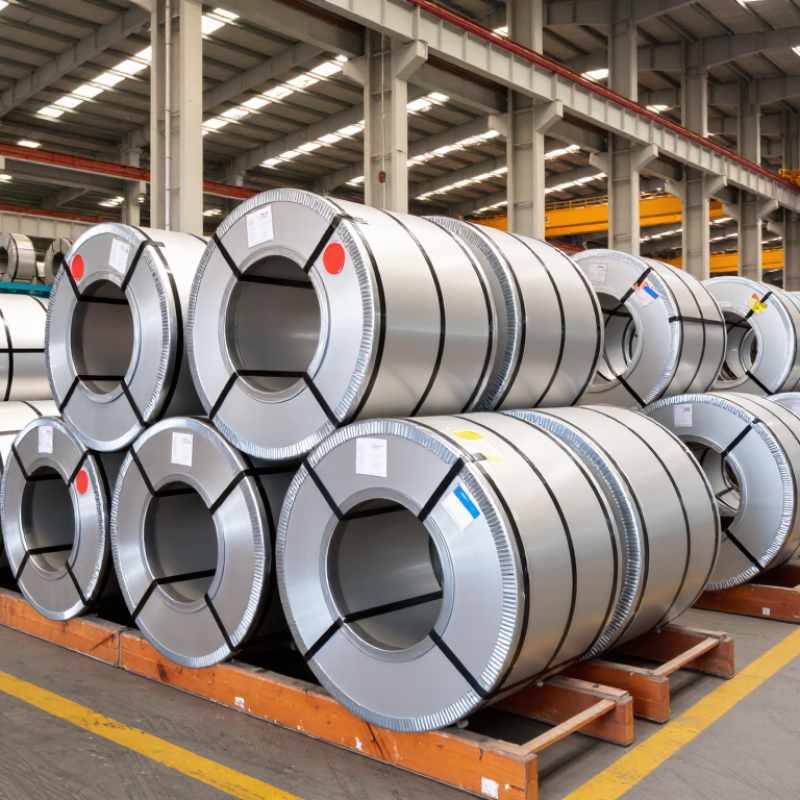
Top SUS201 Stainless Coils Suppliers Worldwide

SUS201 Stainless Coil Identity Under JIS G4304 and ASTM A240

Top SUS201 Stainless Coils Suppliers Worldwide

SUS201 stainless coil is not identified by appearance alone. Under JIS G4304, SUS201 refers to austenitic stainless steel with controlled chromium, nickel, manganese, carbon, and nitrogen levels. The standard also defines product conditions, dimensions, tolerances, and mechanical requirements. ASTM A240 covers stainless plate, sheet, and strip for general and pressure-vessel applications. Its Type 201 or UNS references may resemble SUS201, but equivalence is not automatic.

Check the certificate carefully. Chemistry matters. Typical 201 material contains lower nickel and higher manganese than 304, which can reduce cost while changing corrosion behavior. A supplier should provide heat numbers, melting analysis, tensile results, hardness, surface finish, and coil dimensions. ISSF reported global stainless crude steel production at about 58.4 million tonnes in 2023. That scale increases supply choices, but it also creates inconsistent documentation. A polished coil can still carry the wrong grade.

Tips: Ask for both JIS G4304 and ASTM A240 references only when the test results support them. Confirm whether the coil is annealed, pickled, cold-rolled, or slit. Request independent verification for critical applications. Small details matter.

Field experience shows that buyers often compare price before comparing standards. That is risky. I have seen certificates with incomplete UNS information. They looked acceptable, but needed clarification. A careful supplier welcomes questions, even uncomfortable ones.

SUS201 Chemistry Benchmark: 16–18% Cr, 3.5–5.5% Ni, 5.5–7.5% Mn

Top SUS201 Stainless Coils Suppliers Worldwide

SUS201 coil selection should begin with chemistry, not surface appearance. The commonly specified benchmark contains 16–18% chromium, 3.5–5.5% nickel, and 5.5–7.5% manganese. These ranges support corrosion resistance, formability, and controlled production costs. JIS G4304 and ASTM A240/A240M provide useful reference points for composition, dimensions, and mechanical requirements.

Independent inspection matters. A supplier’s mill test certificate should identify the heat number, chemical results, thickness, and delivery condition. Portable X-ray fluorescence testing can verify chromium and manganese quickly, but nickel readings may require more careful calibration. Laboratory optical emission spectroscopy offers stronger confirmation. Small differences can matter.

Nickel remains a key cost variable. The International Stainless Steel Forum reported global stainless crude steel production at about 58.4 million tonnes in 2023, showing the scale of this supply chain. Yet volume does not guarantee consistent SUS201 chemistry. Request recent test records, not only catalog tables. Check coil edges, gauge tolerance, surface uniformity, and elongation values. A bright surface can hide poor processing.

Procurement teams should compare several worldwide suppliers using the same specification sheet. Ask whether results meet the stated SUS201 range or merely approximate it. That distinction is easy to miss. Chemistry is only one part of performance, and relying on it alone can produce an incomplete decision.

Coil Performance Data: Minimum 685 MPa Tensile Strength Under JIS G4304

Top SUS201 Stainless Coils Suppliers Worldwide

JIS G4304 specifies a minimum tensile strength of 685 MPa for SUS201 in applicable conditions. This value equals 685 N/mm², measured through standardized tensile testing. Coil buyers should verify thickness, temper, rolling direction, and test temperature before comparing offers. These details can change elongation and forming performance.

The World Stainless Association reported approximately 58.4 million tonnes of global stainless crude steel production in 2023. Such scale increases supplier choice, but it also makes traceability essential. Request a mill test certificate showing heat number, chemistry, tensile strength, yield strength, and elongation. Testing should follow JIS Z 2241 or ISO 6892-1 procedures.

Strength alone is not enough. Surface finish, edge condition, coil weight, and weld consistency affect production losses. A supplier may advertise 685 MPa, yet provide results from a different thickness or heat. That is a common weakness. Reviewers should compare three test certificates, not one attractive datasheet. Independent verification can expose variation, especially after slitting, stamping, or deep forming.

Top SUS201 Stainless Coil Performance Reference

The chart presents supplier-neutral mechanical-property limits commonly specified for SUS201 stainless steel under JIS G4304. SUS201 requires a minimum tensile strength of 685 MPa and a minimum 0.2% proof stress of 275 MPa. Elongation is shown on a separate percentage axis. Actual coil values may vary by thickness, product form, heat treatment, and surface finish.

Supplier Qualification Through ISO 9001, EN 10204 3.1, and MTC Traceability

Top SUS201 Stainless Coils Suppliers Worldwide

Reliable supplier qualification begins with verifiable systems, not attractive catalogs. ISO 9001 shows that a supplier controls purchasing, production, inspection, and corrective actions. Ask for the current certificate and confirm its scope, validity, and issuing body. A certificate alone proves little. Review recent audit findings when available. Practical experience also matters, especially with SUS201 coil chemistry, surface finish, gauge tolerance, and edge condition.

Tips: Request a sample coil. Check its label, packaging, width, thickness, and surface under clear light. Compare these details with the quotation and inspection documents. Small mismatches deserve questions.

EN 10204 3.1 certification should identify the material, heat number, dimensions, test results, and authorized inspection approval. The MTC must connect directly to the coil label and packing list. Traceability should continue from the steel mill record to shipment documents. Confirm chemical composition, mechanical properties, and test methods against your purchase requirements. In practice, missing heat numbers can delay acceptance. Sometimes, even a correct-looking MTC contains copied data or unclear units. That is why independent verification can be valuable for critical orders. Keep photos, correspondence, and receiving records together. This creates an auditable trail and supports fair resolution when specifications are not fully met.

Top SUS201 Stainless Coils Suppliers Worldwide - Supplier Qualification Through ISO 9001, EN 10204 3.1, and MTC Traceability
Anonymized supplier qualification benchmark for SUS201 stainless steel coils. Qualification should be confirmed against the applicable purchase specification, inspection plan, and valid production-batch documentation.
Supplier Profile Supply Region ISO 9001 Qualification EN 10204 3.1 Certificate MTC Traceability Chain SUS201 Chemistry Verification Mechanical Test Evidence Audit Score
Profile A
Large-volume coil mill
East Asia Verified
Current certificate reviewed; scope includes stainless steel production and processing.
Available
Heat-specific certificate issued by the manufacturer or authorized inspection function.
Heat number → slab or billet → rolling order → coil number → packing list. PMI or laboratory analysis recorded for C, Si, Mn, P, S, Cr, Ni, and N. Tensile strength, yield strength, and elongation recorded per the agreed product standard. 92/100
Profile B
Integrated stainless processor
South Asia Verified
Certificate validity, issuing body, and certified production scope checked.
Available
Includes product grade, dimensions, heat number, test results, and authorized signature.
Heat number is marked on the coil label and cross-referenced to the MTC and shipping documents. SUS201 chemistry is checked against the purchase specification; typical JIS limits include Cr 16.0–18.0% and Ni 3.5–5.5%. Test results include tensile strength, yield strength, elongation, and test direction where specified. 89/100
Profile C
Export-oriented coil supplier
Europe Verified
Quality-management certificate matched with the legal manufacturing entity and site address.
Required
EN 10204 Type 3.1 documentation must accompany every shipment unless otherwise agreed.
Coil identification, heat number, rolling date, inspection lot, and certificate number retained in the shipment file. Chemical composition is reported by heat and linked to the inspection lot; independent PMI may be requested. Mechanical results must identify the applicable test method, specimen direction, and test temperature where relevant. 87/100
Profile D
Cold-rolled specialty processor
East Asia Verified
Internal process controls cover annealing, pickling, skin-pass rolling, slitting, and final inspection.
Available
Certificate identifies the inspection unit independently from the production department.
Traceability covers master coil, slit coil, surface finish, thickness measurement, and final packaging. Chemistry report includes the elements required by the agreed SUS201 specification and acceptance limits. Thickness, width, tensile properties, surface condition, and dimensional tolerances are recorded by lot. 94/100
Profile E
Regional stock and service center
North America Under Review
Certification applies to processing and distribution; original mill certification must also be assessed.
Required
Original mill EN 10204 3.1 certificate is required for each heat or inspection lot.
Distributor lot → original mill heat → received coil tag → repacking or slitting record. Chemistry is accepted only when the original mill report identifies the same heat number as the supplied coil. Original mill mechanical results are required; retesting is recommended when processing changes the delivery condition. 81/100
Profile F
Low-volume customized supplier
Middle East Required
A valid ISO 9001 certificate and documented corrective-action process are required before approval.
Required
Type 3.1 certificate must be reviewed before release of the purchase order.
Supplier must provide heat, coil, slit-lot, and packaging references with no unexplained breaks in the chain. Chemical analysis must be traceable to the heat number and checked against the agreed SUS201 grade limits. Mechanical testing must be performed by the mill or a technically competent laboratory identified in the records. 78/100
Profile G
Multi-site stainless service group
Western Europe Verified
Multi-site certificate reviewed with site-specific scope and documented control of outsourced processes.
Available
Certificate includes material designation, delivery condition, dimensions, tests, and inspection release.
Digital records link purchase order, heat number, master coil, processing route, inspection lot, and dispatch note. Chemistry is documented by heat and verified through laboratory results or positive material identification. Mechanical properties are reported with test standard, specimen orientation, gauge length, and measured values. 96/100
Profile H
Emerging export supplier
Southeast Asia Under Review
Certificate authenticity and production-site applicability require third-party confirmation.
Required
Heat-specific Type 3.1 documentation is a pre-shipment approval requirement.
Minimum requirement: permanent heat marking, coil tag, MTC reference, and matching commercial documents. Full chemistry report is required; SUS201 chemistry should not be inferred from the product name alone. Mechanical test results must be supplied for each inspection lot and compared with the contractual standard. 84/100
Qualification checkpoints: ISO 9001 confirms a quality-management system, not automatic product conformity. EN 10204 Type 3.1 requires inspection results specific to the supplied product and authorized release. MTC traceability should connect the heat number to the physical coil, inspection lot, and shipping documents.

Worldwide Supplier Comparison by MOQ, Capacity, Lead Time, and Incoterms

Buying SUS201 stainless coils worldwide requires more than a low quoted price. MOQ, production capacity, lead time, and Incoterms can change the real landed cost. A practical comparison should include thickness, width tolerance, surface finish, and tested mechanical properties. Ask for recent mill certificates and sample inspection records. Paperwork matters.

MOQ may range from five metric tons to full-container quantities, depending on the supplier’s production model. Small orders support trials but often increase processing costs. Monthly capacity reveals whether a supplier can handle repeat demand without delaying other projects. Stock coils may ship within 7–15 days, while custom widths or finishes can require 25–45 days. These figures are useful, but not guaranteed. Verify them against recent shipment records.

Incoterms also need careful review. Under FOB, the buyer usually manages ocean freight and insurance after loading. CIF may simplify planning, but buyers should confirm insurance limits, destination charges, and port handling fees. Request a written quotation with coil weight, packing details, payment terms, inspection responsibility, and delivery port. One weakness remains: supplier data is not always comparable. Capacity can mean theoretical output, not available production space. A perfect spreadsheet is still not enough. A video inspection, third-party testing, or a small trial order can expose differences before a larger commitment.

Share by: