Blog

Top Window and Door Store Types for Global Buyers?

Global buyers are no longer choosing windows and doors by appearance alone. Energy performance, delivery reliability, installation support, and regional compliance now shape purchasing decisions. The U.S. Department of Energy reports that windows can account for 25% to 30% of residential heating and cooling energy use. That figure makes product expertise commercially important, not optional. A capable window and door store should explain glazing, frame materials, U-values, air leakage, warranties, and maintenance requirements in practical language.

This article examines the main store types serving international buyers. These include manufacturer-direct showrooms, specialist distributors, online marketplaces, trade-focused suppliers, and local renovation retailers. Each model offers a different balance of price, customization, technical advice, and after-sales service. The National Association of Home Builders continues to identify replacement and remodeling activity as major demand drivers in mature housing markets. Meanwhile, the United Nations projects that nearly 70% of the global population may live in urban areas by 2050. Dense cities may favor compact suppliers, while new residential developments often require bulk purchasing and coordinated delivery.

The categories overlap. That matters. A digital marketplace may provide broad selection but limited installation guidance. A local showroom may offer dependable fitting but fewer international brands. Reports from Grand View Research and similar market analysts suggest continued growth in construction materials, yet market forecasts differ by region, currency, and methodology. Buyers should therefore test every claim against certifications, project references, sample performance data, and written warranty terms. This guide offers a practical framework, though no store type fits every climate, building code, or budget. Real projects are messier. That is worth remembering.
Top Window and Door Store Types for Global Buyers?

Buyer Criteria: IEA Reports Buildings Use About 30% of Global Energy

Global buyers are paying closer attention to window and door store types because buildings consume substantial energy. The International Energy Agency reports that buildings use about 30% of global final energy. The 2023 UNEP Global Status Report gives a higher figure, about 34%, because its accounting boundaries differ. This gap deserves attention, not dismissal.

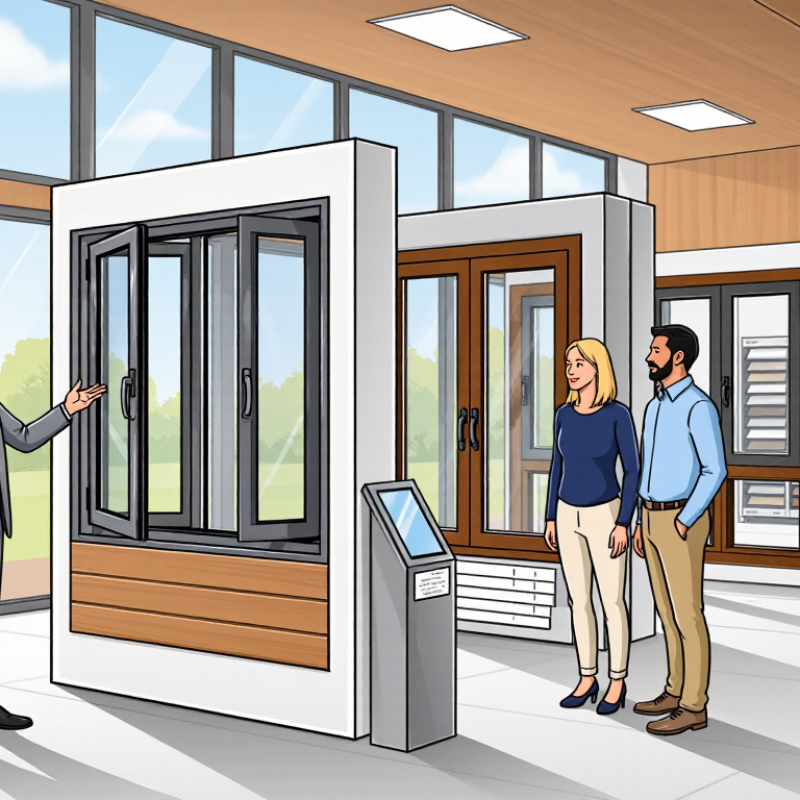
Specialist showrooms suit buyers who need to compare glazing, frame materials, hardware, and installation details in person. Building-material distributors can offer broader project support, stock availability, and regional compliance guidance. Online technical stores work well for repeat purchasers, but product data must be verified carefully. A clear product page should show U-value, solar heat gain coefficient, air-leakage performance, acoustic ratings, and tested dimensions. Pictures are not enough.

Energy performance depends on installation too. The International Energy Agency stresses stronger building efficiency as a major route to lower energy demand. Buyers should therefore examine thermal breaks, spacer design, sealing systems, and installer qualifications. Environmental Product Declarations can help assess embodied impacts, while ISO and regional testing standards improve comparability. Still, lower U-values may not suit every climate; excessive solar gain can overheat a sunny room. I have seen specifications look impressive until poor site measurements weakened the result. Store selection should include technical advice, documented test evidence, replacement-part access, and a realistic warranty process. The cheapest quotation often hides the hardest questions.

Factory-Direct Showrooms: Compare NFRC U-Factor and SHGC Ratings

Global buyers often compare factory-direct window and door showrooms for price and customization. The stronger comparison begins with performance ratings. In a factory-direct showroom, ask to see the complete NFRC label, not only a sales brochure. U-factor measures heat transfer through the product. Lower numbers usually indicate better insulation. SHGC measures how much solar heat enters through the glass. Lower SHGC can help in hot climates, while higher SHGC may benefit colder rooms.

A credible showroom should explain testing conditions, glazing choices, frame materials, and installation details. Ratings can change with double or triple glazing, coatings, spacers, and frame design. I have found that buyers sometimes focus on one impressive number. That can be misleading. A low U-factor does not guarantee comfort if installation leaves gaps around the frame. The showroom should also provide technical documents and clear after-sales support.

Tips: Bring your climate zone, wall dimensions, and room orientation. Ask for ratings under the same testing standard. Compare identical product sizes. Check whether the quoted value covers the whole unit or only the glass. A sunny west-facing room may need stronger solar control. A shaded bedroom may need better insulation instead. One detail matters. Request written installation guidance before ordering. Experiences vary, and even a careful comparison may miss local wind, moisture, or shading conditions.

Wholesale Distributors: Track Demand Against 1.42M U.S. Housing Starts

Top Window and Door Store Types for Global Buyers?

Wholesale distributors can use 1.42 million U.S. housing starts as a practical demand benchmark. It signals substantial movement through builders, contractors, and specialized window and door stores. Yet housing starts do not equal immediate product orders. Framing delays, financing changes, and regional weather can shift purchasing schedules.

New-construction dealers often need standard-size vinyl windows, insulated entry doors, sliding units, and builder-grade hardware. Their priorities are consistent supply, documented performance, and predictable delivery. Remodeling-focused stores require broader sizes, energy-efficient glazing, replacement doors, and flexible order quantities. Multifamily suppliers may favor durable balcony doors, fire-rated assemblies, and coordinated project packaging.

Track demand by housing type and region, not only by the national figure. Single-family starts can support steady showroom traffic, while multifamily projects may create larger but less frequent orders. Verify local permits and contractor backlogs before increasing inventory. That step is easy to skip.

In practice, I would compare monthly starts with quotations, cancellations, and warehouse turnover. A sudden rise in starts may still produce weak near-term demand. Forecasting remains imperfect. Keep safety stock for fast-moving sizes, but avoid filling space with untested configurations. Clear technical files, installation guidance, and responsive after-sales support also influence distributor confidence. Reliable records matter more than optimistic projections.

Top Window and Door Store Types for Global Buyers? – Wholesale Distributors: Track Demand Against 1.42M U.S. Housing Starts
Store Type Core Product Range Primary Buyer Best-Fit Project Demand Wholesale Demand Signal Recommended Stocking Focus
Full-Line Window & Door Specialist Vinyl, aluminum, wood and composite windows; exterior doors; patio doors; screens and installation accessories Regional distributors, contractors and residential builders New single-family construction, replacement windows and coordinated exterior packages High Standard white and neutral finishes, common rough-opening sizes, insulated glass units, pre-hung exterior doors and replacement components
Building-Materials Distributor Windows and doors combined with siding, roofing, framing, insulation and trim Large contractors, dealer networks and multifamily project buyers High-volume new construction and multi-product project procurement High SKU rationalization, palletized shipments, project-lot packaging, coordinated trim and reliable replenishment schedules
Replacement & Remodeling Store Replacement windows, storm doors, entry doors, hardware, flashing and retrofit accessories Remodelers, installers and homeowners purchasing through trade counters Energy upgrades, weatherization, aging-home repairs and curb-appeal renovations High Retrofit-friendly profiles, low-maintenance materials, common replacement sizes, installation kits and short lead-time items
Hardware & Home-Improvement Store Ready-to-install doors, basic windows, locks, handles, hinges, screens and repair parts Small contractors, maintenance teams and do-it-yourself buyers Small repairs, rental-property maintenance and low-complexity renovations Medium to High Fast-moving standard sizes, boxed products, clear installation instructions, replacement hardware and compact packaging
Commercial & Multifamily Fenestration Outlet Project windows, aluminum entrances, curtain-wall components, fire-rated doors and access hardware Commercial contractors, architects, developers and institutional buyers Apartment buildings, offices, schools, healthcare facilities and mixed-use projects Medium to High Documented performance data, tested assemblies, acoustic and thermal options, submittal support and project-level delivery control
Prefab, Modular & Panelized-Building Supplier Factory-sized windows, exterior doors, balcony doors and preassembled openings Factory builders, modular manufacturers and off-site construction integrators Repeatable housing models, labor-efficient construction and controlled factory production Medium Repeatable dimensions, barcode or batch traceability, protective packaging, synchronized delivery and low-variation specifications
Online Trade-Order Store Replacement parts, standard doors, windows, screens, locks, seals and installation accessories Small contractors, maintenance professionals and international sourcing buyers Low-volume orders, urgent replacements and price comparison across standardized products Medium Accurate dimensional data, downloadable technical files, transparent carton quantities, freight-ready packaging and spare-part availability
U.S. demand benchmark: The United States recorded approximately 1.42 million privately owned housing starts in 2023. This benchmark includes both single-family and multifamily units and is useful for comparing channel potential; it is not a forecast of store-level sales.

Authorized Dealers: Verify ENERGY STAR, CE, UKCA, and Local Codes

Global buyers should treat an authorized dealer as a verification partner, not merely a sales contact. Ask for proof of authorization, current product documentation, and installation qualifications. A dealer should explain which models meet ENERGY STAR requirements and provide the relevant performance data. A logo alone is not enough.

For European projects, request the Declaration of Performance and supporting conformity records for CE-marked products. Projects in Great Britain may require UKCA documentation, depending on the product and applicable rules. These marks address different regulatory frameworks. They should never be treated as interchangeable. Check the product code, test date, factory details, and document scope. Small mismatches can create expensive delays.

Local building codes still control the final decision. Confirm thermal values, air leakage, water resistance, wind pressure, safety glazing, fire performance, and emergency escape requirements. Coastal sites may need stronger wind ratings. Historic districts may restrict frame profiles or visible hardware. An experienced dealer should coordinate with a qualified local professional before ordering. I have found that paperwork is often clearer than installation reality. Site measurements, drainage paths, and wall conditions still need careful review. Sometimes a technically certified window is unsuitable for the actual building. Ask for sample labels, signed quotations, warranty terms, and a written record of who handles defects. That extra step feels slow, but missing it can be slower.

Online Stores and Installers: Compare ISO Standards, Warranties, and Delivery Metrics

Global buyers usually compare two store types: online sellers and local installers. Online stores offer broad catalogues, clear dimensions, and fast quotation tools. Yet screens cannot reveal frame stiffness or gasket quality. I once found a low price hiding oversized packaging fees. That mistake changed my buying checklist. Installers measure openings, check drainage, and coordinate fitting. Their advice helps with uneven masonry. However, local service may cost more and vary sharply between crews.

ISO evidence needs careful reading. ISO 9001 shows a documented quality-management system, not automatic window performance. Ask for a current certificate, issuing body, scope, and factory address. Request test reports for air leakage, water tightness, wind resistance, and thermal performance. These documents should match the exact profile, glass package, and production site. A certificate without product data is weak evidence. Check it twice. Old paperwork can look reassuring.

Warranty comparison should separate frames, hardware, glass, finishes, labor, and replacement shipping. Check whether coverage follows the property or only the original buyer. Ask who handles damaged units across borders. Delivery metrics deserve equal weight: quoted lead time, on-time percentage, damage rate, tracking quality, and customs-document accuracy. A reliable seller shares recent figures, not perfect promises. Allow inspection time before installation. I still underestimate that buffer during peak seasons. Photograph crates, labels, and corner protection on arrival. Small evidence prevents large arguments.

Share by: